Bookshelf Styling: Ten Quick Tips
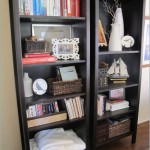
August 26, 2010When I first posted on the finished living room, I received a few comments and questions on bookshelf styling. I had put so much thought and research into redecorating our bookshelves (believe you me when I say they were crowded and totally unappealing at the start) that I thought I’d share a few of the tips and tricks I learned from other blogs and my favorite catalogs.

The biggest challenge? Corralling so much material into one space. Sure it’s easy to style a bookcase if you don’t have any… books (like all of those lovely catalog photos), but trying to incorporate different sizes, colors and heights of dozens of paperbacks and reference books so that the bookshelf was usable was another story entirely. At the end of the day our bookcase needed to pass both the form & function test, and ultimately become a reflection of who we were.
But back to the styling… my trusty Pottery Barn catalog actually turned out to be the biggest help in determining layout, organization and aesthetics while Young House Love’s bookcase styling tips came in handy as well.

Top Ten Bookshelf Styling Tips & Tricks
a
1. Start with a fresh slate. Clear your palette, dust all of those hidden corners and start with a clean slate. Sort your now de-shelved items into broad categories: related books (ours were home improvement, paperback novels – fiction and nonfiction, philosophy/religious topics, travel and over-sized), picture frames, tchotchkes, etc.
2. Create a rough layout. This may take some time but play with the layout and design of your space. This might mean adjusting shelf heights to accommodate larger items or baskets.
3. Don’t fill every shelf with books. When you’re ready to start building, consider random book groupings throughout the shelves. I suggest starting with books over decor items because it’s easiest to see what will take up the most room, require organization (in baskets, bins, etc.) and which ‘book categories’ should go where. An every-other-shelf rule is a good one to follow, or at the very least skip large spaces on each shelf to give the eye a visual rest.

4. Baskets, boxes, bins, oh my! Now that you’re aware of what types of storage you’ll need, pull in a few baskets and other holding receptacles to wrangle unruly items. I used a large basket and two brown note card containers on the lowest shelf, for example, to house miscellaneous papers, DVDs and CDs. A shallow basket on the second level easily holds paperbacks that aren’t as pretty (two levels deep with just the tops of the spines popping out). Stick with like-colored baskets in various sizes or choose two-three complimentary shades to keep the flow. Michael’s, West Elm, Home Goods and organizing stores are all great resources.
5. Grouping books by size and color. Now that we have many of the books ‘boxed up’, choose your favorites to display. I chose to add them back to the shelf in their ‘categories’ for easy access but you could group but just height, color and size for aesthetics. I arranged the books within my categories until they were pleasing to the eye (taller books towards the ends, like colors grouped together, etc) and even placed several on their backs (bottoms out) because the whites of the pages were much more appealing than large, random colored spines. As you place your books step back occasionally to be sure that the flow from the top of the shelf all the way to the bottom works well.
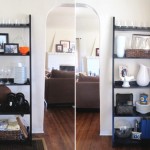
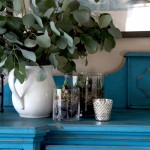
6. Now on to the decor… Not every bookshelf will need to hold books. Here’s are two examples from my dining room used primarily for glassware and serving dishes. But book-toting-bookcases and display-only shelves alike, general decor objects can all follow the same rule: less is more. Choose only your favorites and sort them out by height, size and color.

7. ‘Filling’ the space while taking care of the height. One of the easiest mistakes to make is to not ‘fill’ in a shelf space. This means horizontally and vertically. Try stacking your books with picture frames on top or paintings in the background. Vases, plates and sculptures also help to fill in on height. A note on pictures (since they provide a great option fo height): It’s fun to display every great framed photograph you’ve got but I found this to be the most crowding effect on the whole shelf. So I sadly sorted out the not-so-great ones for other locations and chose a select few that tied in well with the overall layout (height, color of frame, etc).
8. Rounding out your space with a variety of textures. Between the baskets, boxes, books and decor items you have plenty of textural elements all in play, but keep in mind that they should be varied and found through out the display to create the most appealing look. After playing with this bookshelf forever I finally found the right solution for the lower left hand corner – a simple stack of soft blankets that pulls the white from the vases and create a soft and comfy element to the layout. Branches and decorative wood-themed balls helped to tie in enough natural elements to make up for the lack of a great plant (or the like). I do wish one would grow in this shaded corner of the room, though!
9. Similarly colored ‘extras’. By extras I mean all of those vases, bowls, ceramic animals and general keepsakes you have lying around. Kevin is quite the sailor and we have slowly amassed miniature boats, anchors and navigational notebooks to account for a whole shelf, but by choosing just a few for the living room that represent his love, the shelf feels less ‘overtaken’. I also love simple white decorations – ceramic vases, animals, plates, you name it – and a few here and there tie together a clean and organized layout.
For the dining room, it’s easier to group items by color because you likely have all clear glasses and perhaps just one or two colors of plates, bowls, etc. Group in odds (love those odds!) and get creative with displaying (such as vintage plates or juice carafes popping out of baskets). Pitchers, vases and stacked plates/bowls make great height statements, but don’t be afraid to incorporate non-dining room wares into the mix (such as this thrift store mirror that ‘fills’ in the space behind the juice carafes). And use those cake stands! They make great display areas.

10. Step back and smile! The bookshelf should represent you and not the random findings of a West Elm photoshoot, but now that it’s organized, well-laid out and aesthetically pleasing you’ll love the look. Take this opportunity to move around pieces and level out spaces. Congrats!
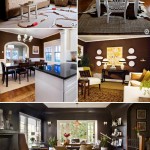
Here’s more inspiration I dug up for the dining room displays:

As a quick wrap up, here are my go-to tips for organizing a bookcase: group by height, color and size – don’t be afraid to pull in plenty of storage help – keep the flow of your shelf constant by ‘filling’ in the shelf height – and less is more!
Tags: Accessories, Decorating, Dining Room, DIY, Home, Living Room, Tutorial
Posted in Home, Renovating Adventures | 14 Comments »
DIY: Teacup Candlesticks
July 22, 2010
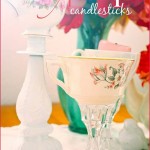
This idea is so clever! I can’t wait for my next shabby chic tea party opportunity to try it out. It’s a bit similar to these DIY cakestands but with teacups for beautiful votive holders.
Disney of Ruffles & Stuff, who to my sadness wrote her last post just recently, shared this creative idea in June. I will miss her beautiful talent! But the blog is still alive so we can continue to meander through it every once in a while for inspiration. Hope she’s enjoying much more mummyhood time now.

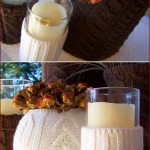
Candlesticks are great thrift finds and it would be easy to adhere a teacup to each with a bit of epoxy or super glue. I fill my teacup votives (shown here in this vintage shower scape) with rice to keep the wax from settling at the bottom of the cup.
Tags: Baby Shower, Bridal Shower, Crafty Solutions, Decorating, Dining Room, Dinner Parties, DIY, Home, Parties & Entertaining, Tutorial
Posted in Crafty Solutions, Home, Parties & Entertaining | 3 Comments »
Rooms Inspired by the Month of April
April 28, 2010
I can’t believe it’s already the end of April! This month as flown by so quickly.
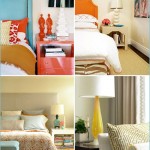
April inspires me with bright colors, bold patterns and PASTELS! What’s the best way to incorporate a bit of pastel? In beautiful accessories (like muted lampshades, funky upholstered headboards, throw pillows and even wallpaper) that add a hint of soft, sunny color to lighten up an entire room.

Oh I adore the above room from BHG, it very much reminds me of dyed Easter eggs and spring. Sigh.
My mind has been in many bright places recently and April seams the fitting month to honor the spring mentality! I love the look of gentle pastels contrasted with bold colors like the living room at the top of this post by Tobi Fairley and these bedrooms from DecorPad:

The orange hints peeking through in this House to Home room are subtle but lovely against the shades of soft blue in the wallpaper.

Two pastel rooms that really take on the meaning of bright and beautiful:

There are too many great examples! Here’s a quick link to the rest of the Rooms Inspired by the Month series. Five more reasons to love spring right after the jump. Read more »
Tags: Bedroom, Decorating, Dining Room, Home, Living Room, Rooms Inspired by the Month
Posted in Home | 2 Comments »
Guest Blogging… Over at 6th Street Design School!
April 17, 2010
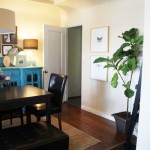
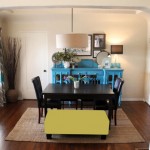
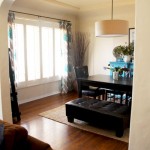
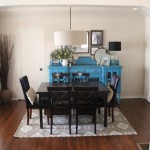
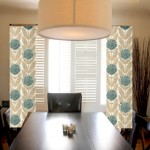
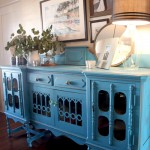
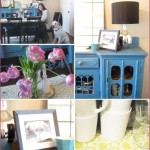
Come visit me today over at 6th Street Design School! Kirsten asked me to share one of my favorite spots in our home… and I was delighted to share a sneak peek and several details of our ever-transforming dining room (which has served as my office space, our dinner party venue and project table during our remodel).
Come say hi!
Tags: Accessories, Blue, Decorating, Dining Room, Furniture, Turquoise
Posted in Guest Blog, Home, Renovating Adventures | 2 Comments »