Kitchen Additions: New Breakfast Nook, Tufting Tutorial
January 21, 2013On Friday I shared our new breakfast nook in the kitchen:

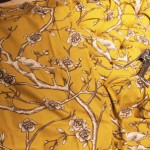
And I’d have to say that my very favoritist part of this project is the new tufted backing to the bench (in that beautiful citrine vintage blossom!). That bench is actually two 24″ above-the-fridge cabinets with a new set of Ikea legs (refrigerator cabinets are actually a great size for seating – they’re generally 18″ or so inches deep, 12-15″ high – though the added legs help – and 24-36″ long). The tufted backing helps to add a comfy and cozy feeling to the space and gives the eye something to focus on.

Today’s post is about the DIY tufting portion of the nook because that was a pretty decent (but totally doable) project that I’ve been really looking forward to sharing with you (that, and a few live and learn lessons along the way – because there are always a few
).
Here are links to posts about our adventures in finding the right bench seats, cushions, the ugly plywood window design dilemma we ran into, the revealing of the tufted backing (after much ‘what is this space missing?’ pondering), the initial inspiration for the project and pulling it all together.

I owe a good majority of this next tutorial to Jenny and her awesome tufted headboard guide. Be sure to head on over there if anything here is a bit hazy, or just for more great tufting advice from a real expert. I changed things up a bit (such as using plywood instead of pegboard, stapling my tufts instead of sewing) and by incorporating tips from other tufting posts I’ve read over the years, and this project was a bit of a culmination of all of the above.
*******************************************************************************
Tufted Bench Seat Backing
m
These are the same steps when it comes to tufting and creating your own upholstered headboard, coffee table-turned-ottoman, fabric covered bench, etc. and while you may be modifying tiny details only (like corners) I’ve used these basic tips on various projects – no need to limit it to a bench back!
Materials for a 48″ long tufted bench back: 3 yards of fabric, 28 DIY buttons (usually sold in a kit of 5-8) – I used 5/8″, staple gun, 1/2″ staples (the longer the easier to drive through foam and into plywood), 48×38″ plywood (or whatever the height of your bench back), 48×22″ three inch foam, high loft batting to cover front and back.
My first step in this project was selecting a sturdy material for my bench back base. Options for a tufted frame include plywood, pegboard (a suggestion from Jenny that makes measuring and sewing tufts super easy) or an existing headboard, bench, etc that already features a neat shape (like this one).
For this project I ended up choosing 1/2″ plywood since I was looking for a material that would stand on its own (pegboard is best attached to a wall) and is a custom size and shape (no existing frame could be found, though I tried). Plus, I’m stealing one of my previous staple gun tufted button tips from another headboard makeover rather than sew the buttons on myself (which is where pegboard would be oh-so helpful).

I’ve learned to love 3″ foam for tufted projects (learned this lesson the hard way using 1″ on a coffee table-converted-to-bench a few years ago back and 2″ on a headboard a while back). 3″ looks deep and professional, yet is still a manageable thickness with non-upholstery tools. Unfortunately Joann’s fabrics was out of this particular size when I visited late one evening so I ended up stacking a 2″ + 1″ piece for the same finished look.
I recommend cutting your foam (easiest with a serrated knife, electric knife or sharp shears if foam is thin enough) so that it is slightly larger than the plywood below. Will help keep those corners soft, smooth and beautiful, too!

Next, I marked my tufts off on the top of the foam. I love the look of close tufts!

A paring knife dug out a quarter ish sized circle out of the foam and all the way through to the plywood below.

It’s helpful to find an old one (thrift store find) that you won’t need in the kitchen anymore! This guy was quite dull by the time I finished my 28th cut and I’m sure it was full of bits of broken foam.

Before applying a spray adhesive to the two separate pieces of foam (I actually found it much easier to cut through one and then lift that layer up and finish cutting through the lower layer, rather than at the same time), Liv used them as yoga mats.

The foam is adhered to the plywood with spray adhesive as well, then a high-loft batting is wrapped around the entire piece. It was important to me that the bottom portion of the bench backing (while not tufted so it fits easily behind the the benches and against the wall) is also covered in fabric, and extending the batting down keeps the look soft and consistent all over.
No need to spray adhere the batting to the foam, you’ll actually want the flexibility and stretch of the batting as you tug and pull it into various tuft crevices as you staple in the next step.

Now’s a great time to mention how you can create the same tufted look if you didn’t want to go the stapling route. My method is pretty simple – instead of drilling holes into the plywood and using upholstery needles to sew each tufted button to the backing, I simply staple each tuft down and then cover the staple with a glued button. Easy peasy. But, if you were opposed, you could complete all of the above steps while also marking off your plywood and drilling a small hole at each tufting mark. Then this next step will turn into an upholstery needle + sturdy thread project rather than staple gun.

Back to where we left off. Because my choice of fabric for this project is a patterned fabric (found here), I needed to adjoin two 54″ sections of the fabric to keep the pattern running vertical (rather than turning the fabric on its side and running it horizontally, meaning my birds would be sitting sideways when looking at the bench seat). Fabric typically comes in 48-60″ widths and two 54″ (the width of this fabric off of the bolt) fit the 48″ plywood perfectly after all tufting. If you were using a solid you might easily cover the entire top portion of the bench backing with 2.5 continuous yards (though I might purchase 3 +1 for the skirt just to be on the safe side).
To do this, I started at the very center of the board with one 54″ section and tufted the entire right side, then overlapped the second 54″ section on the left and slowly intertwined the the two fabrics into the tufting down the center.
My first tuft starts with pushing the fabric and batting directly through the foam until it touches the plywood.

Then inching the staple gun into the deep fabric hole, attach fabric to plywood.

You might go through a lot of staples in this next step! I had staples popping left and right and that’s just the nature of shoving a staple gun into so much foam and batting and fabric. Patience will serve up one clean staple per tuft and that’s all you really need.
Extend the new tufts out from the center. As I worked my way from one tuft to the next, I was careful to watch how the fabric folded out from each tuft. You can control the diamond shape of the fabric between tufts by pulling and folding the fabric as you go, or you might opt for a slightly more random look by allowing the fabric to gather out in all directions from each tuft. Another helpful hint: use the pattern to make sure you’re working in a straight line. All of the folding and pulling can slowly veer you off in one direction or another and you won’t realize it until you’re 3 tufting rows down.

Half way there!

Now it’s time for me to add the second 54″ section of fabric.

I began by overlapping the two fabrics by at least 12-18″ so that there was plenty of room for weaving the new fabric in and out of the existing center row of tufts (12″ is your absolute minimum, give yourself room to work here).

Cutting the fabric as I went allowed me to play with the zig zagging tufts and how the two fabrics would overlap so that eventually the adjoining of the two sections of fabric would be invisible.


Then on to the rest of the tufts and all the way out to the edges. My edges have not been secured at all just yet, and that’s on purpose. Sometimes you have to pull up several tufts to start over (as simple as pulling up staples, no big deal) and you don’t want a permanent feel just yet.

After my tufting is finished, I’ve moved on to securing the fabric at the base of the foam directly to the board. By pushing the fabric up a bit I can hide a staple easily (but I’ll cover this up again when I add the lower ‘skirt’) and keep the foam pushed up and perky instead of letting it fall flat or sag at the bottom (har har).

I technically could just extend both 54″ pieces of fabric straight down to the bottom of my board, but that leaves me with an ugly seam down the middle and a lot of gathered fabric. So instead, I cut those extra pieces off and reattached a correctly sized piece of fabric to the base of the tufts.

By flipping the fabric upside down and stapling the under side, I’m hiding my new staples and my previous staples from eye sight.
![]()
Now the base is one smooth, solid length of fabric. That extended batting makes a huge difference in look, too.


To secure the outside edges of the top of the back, simply pull the fabric carefully and staple, starting in the center of each of the three sides. Play as you go until the folds feel appropriate and the corners overlap nicely. You might prefer a straight fold that goes from tuft to top, or something with more of a ‘v’ shape. The fabric will tell you what it has in mind, too.

Having the batting wrap around to the back of the plywood will help keep your edges soft and smooth (the slightly larger foam helps a ton, too).
Not to be overlooked are the covered buttons! Button kits are available at most craft shops and I chose a 5/8″ size with serrated edges. This is a must! There are button kits with molds for forming buttons, or kits with serrated edging to grip that fabric and no mold. In my opinion the second option is much easier to work with (though I couldn’t find a link online at Joann’s to share the exact product). Big shout out to David and Michael for helping me finish 28 hand covered buttons in an hour – I still have feelings in my fingertips because of the help.

Makes a world of a difference! A small detail but one that finishes off the project perfectly. The buttons are secured with a strong dot of glue to the back of each, then I pushed them into the tuft crevice.

Finished!

The lumbar throw pillow with the fun zig zag print is by Etsy artist PillowMio and the dandylion print by MyModernHome. I purchase most of my inserts at West Elm because of how deliciously cozy and reasonably priced they are (and often ask the Etsy artists to sew the coverings to match the inserts if I can’t find the right size, I love them that much).
So thrilled with the new breakfast nook! Will keep you posted on the install of that new door to the left of the nook and the molding at the end of the island… when it makes it to the top of the list
.

PS More on everything kitchen remodel (it started as a den at the back of our house) by sorting all blog posts by this tag.

And more on the breakfast nook transformation here: part 1, the inspiration, part 2, the bench, part 3, the cushions!, part 4, the ugly wall design dilemma, part 5, revealing the tufted bench, part 6, finished!
Tags: Accessories, Before & After, Crafty Solutions, Decorating, DIY, Home, Kitchen, Tutorial, Yellow
Posted in Crafty Solutions, DIY, Favorite Fabric, Favorites, Home, Our Kitchen Remodel, Renovating Adventures | 8 Comments »
Kitchen Additions: New Breakfast Nook, Part 3 – Cushions!
November 19, 2012Happy Thanksgiving week! We are up to our ears in holiday events, projects, work stuff and family (always, always awesome) and I’ve discovered (I am a late, late comer) the most amazing tool to document all of the holiday-wonderfulness that is happening at the moment! What have I been missing out on all of these months without Instagram? Count me in as an immediate fan. Lately I’ve been posting on projects-in-progress, Liv-isms, travel adventure updates and sweet Sunday mornings with the family.

You can meet me over there by searching for ‘morganspenla’ (I know it’s not so original when it comes to Instagram names… I’ll try to be clever next time. but you’ll know it’s me when you find me because there’s none other
). Really, there isn’t. There are perhaps 20 Spenlas on the entire planet and likely you are related to us if you are one of them (don’t be confused by the alternative sugar substitute, most telemarketers and grocery clerks are. But it’s all good.).
The true purpose for the post today is to share the progress on our kitchen nook. The cushions are finished and are in place! And the bench functions as a real bench! It’s wonderful, it’s the bench that this kitchen has always needed.

Last I left you, we had purchased over-the-fridge cabinets from Lowe’s (because of their unique height and width) and had added legs to prop them up off of the ground.
I specifically chose a yellow for this space to help cheer up the empty color zone between the dark floors and the grey quartz countertops. The yellow up close is a great mustard that is not quite too bright but happy enough to make you smile when you walk into the room.
Here is the link online over at Calico Corners (who teamed up with me on this project, I’ll be sharing the full, finished breakfast nook next month ish on their blog as well once the tables, chairs, etc are in place! I’m assuming it will take me a bit to hunt every little piece down…
).
I really labored over the type of fabric to use here… everything in my gut insisted on an outdoor, easily wipe-upable canvas fabric that would repel any future kid (or adult) stains. But I couldn’t find anything that I loved, and I looked and looked and looked for a long while. When I came across this Vintage Blossom print I immediately fell for how it would tie in so well with the rest of the kitchen and how it would also function as a ‘base’ for additional patterns in the form of pillows and chair cushions. The colors are simple – mustard, brown (which is also prevalent in the bar stool cushions) and white.

The colors also tie in nicely with the existing calendar artwork.

But rest assured it will get a healthy coating of a stain repellent spray like Scotchguard.
The lumbar throw pillow with the fun zig zag print is by Etsy artist PillowMio and the dandylion print by MyModernHome. I purchase most of my inserts at West Elm because of how deliciously cozy and reasonably priced they are.
The photos are one step too close to washed out, but it’s hard to capture that light through the doors in contrast with the dark floors, which pulls everything down.

My inspiration for the style of cushion was to use a settee pattern, kind of like this one:
Or this one from Joss & Main (which I considered purchasing when it was up for a steal of a price before this all started, but the seat depth on a traditional settee is too overwhelming for our kitchen).

I used this pattern in reverse so that if I were to separate out the two benches, the tops would come with easily. The ‘topper’ is one long piece that can also be used as a bench back. Thinking out of the box here
. I need to add more padding though, now that I’m looking at all of these photos.

Here’s a shot of what I mean about separating out those two bench pieces:

Here’s the opposite end of the island, and see how these benches might be used for extra seating when we have the big french doors wide open and guests are mingling about (with a glass of wine and hor d’oeuvres?) from deck to kitchen? Ah, lovely.
In fact, I may not even keep the bench where it is now. It might find its way over to the wall to the left of the doors and kitchen where there is currently a rather large gap of space.

The plywood hides the remnants of an old window from the previous layout of the den. I currently hide it with canvas art or by covering it with pinned up finger paintings by Liv and what have you, but here is the eyesore in all of its glory. I suppose it does function as a key holder. There is its purpose in life.
When it came to the cushions themselves, I left it to the pros. I gave my amazing dry cleaning lady – my secret weapon – (who made these awesome slip covers for my nursery rocker) the dimensions of the cabinets and future cushions, the roll of Vintage Blossom fabric (purposefully adding enough for welting, which she added for $5 per cushion), and invisible zipper material for all. I believe the entire sewing portion ran me about $20 for each full cushion.


I could have attempted it but the quality and price of outsourcing this project was absolutely worth it! With that much less of a chance of me and the sewing machine getting into a fight over box cushions (perhaps I will one day learn).
We are that much closer to finishing up the entirety of this kitchen!

Still left? A table, chairs (bistro? bentwood?), a neat piece of art for to cover up my one-day-we’ll-fix-it window, and few additional molding touch ups. Perhaps a big pendant to go over future table? Happy Monday!
PS you can catch all of the kitchen posts (which started as this den) right here.
Tags: Accessories, Breakfast Nook, Crafty Solutions, Decorating, Fabric, Home, Kitchen, Yellow
Posted in Favorite Fabric, Home, Our Kitchen Remodel, Renovating Adventures | 13 Comments »
Living Room Refresh: Semi-DIY Colorful Canvas Art
July 30, 2012Happy start to the week! Getting those cake posts together last week wore me out… but I have several new home projects to share with you this week and I’m really excited about this first one.
I have been looking for a large piece of art for the living room for some time, but everything I come across is either out of my price range or the wrong size/look. But I’ve found a solution. Using a one yard piece of fabric from Spoonflower + a couple of tubes of oil paint/acrylics, I channeled my inner artist and created a piece of art for the living room.

The fabric did 90% of the work, but maybe that’s why I’m so thrilled with how it came out
.
Here’s a reminder of how the space looks when coming in through that above door:

The color palette in this room includes plenty of neutrals plus the occasional bright pop of green and raspberry red.


And this new painting ties in perfectly with the scheme.

The inspiration behind this piece of art came from when my family traveled to Australia two years back to visit my younger brother who was studying abroad in Perth. The aboriginal art was absolutely stunning, full of brilliant colors and beautiful abstract patterns and I badly wanted to bring a giant canvas home. That wasn’t quite possible, mostly due to luggage and price reasons, but it did cause me to begin a search for a potential DIY solution.
What’s kept me from trying this out? The thought of hanging art in the house where I am the artist. I know that sounds crazy, but I’m very critical of my own work and art is very much ‘on display’ – as opposed to maybe a repainted chair or even a room that we’ve completed. Fast forward to this spring, and my finding Ish & Chi’s and MadeByGirl’s absolutely stunning aboriginal pieces of art by artist Jeannie Mills. What a fantastic pop of color for the space! How beautiful!

I know, I know, mine does nothing to contend with the originals. But if your’e not familiar with where my inspiration came from, it’s a fun, extra large piece to have in the house and to bring in that bright coral color.


Original oil paintings (unless awesome thrift store finds – I’ve picked up a few small ones) can be pretty expensive, but when I came across thisfabric on Spoonflower while searching for other random project fabric, a semi-DIY art idea was born. Here’s that exact fabric, plus a few other designs that I loved by the same artist. (Maybe I’ll move the painting to Liv’s future big girl room and use these as the accent fabrics… that watercolor version is amazing.)
That fabric sparked the idea of creating my own canvas art to hang, and the best news yet? Spoonflower gives you the option of ordering on a canvas cloth! It’s not really as thick and sturdy as a gallery canvas, but it is hardier than your average cotton and gives a similar look to the pattern printed on it.
I really love art that is edged out in a simple wooden molding. It’s usually attached to the canvas post-production and sits maybe 1/8″ from the edge of the art (Ish & Chi actually had hers framed just like this but in white). I have a friend who’s aunt makes her own and I was inspired by her birch versions to use this Ikea frame, which worked just perfectly! and for a great price.
The third component to this project was a set of oil paints or acrylics. I have been collecting these little tubes for years and years and was so excited to finally pull my ‘painting’ box off of the bookshelf.

This box holds all kinds of trinkets that I’ve been saving for my future art days. {sigh}

But back to getting that frame all ready to go. First up was ironing out my fabric (Spoonflower ships with fabric folded rather than rolled so there are always a few decent creases) and then flipping it over and cutting to size.

I pulled the fabric nice and tight and added to the frame (with glass and mat removed).

A little super glue along the inside helped to reinforce the position of the fabric. (Photo below shows clamps which were helpful in lining up the fabric on the front side of the frame before securing in place.)


Now we’re ready to paint! Though this particular fabric would have looked great just framed and on its own. (No, I have not kid-proofed my bench seat in seran wrap
, that’s just the plastic from the Ikea frame above that I eventually used to protect my table from paint smudges).
See what I mean about little creases? I used the steam option on my iron to get out the last of em before applying paint.

I chose a selection of reds, corals, crimsons, yellows and whites from my paints and began mixing up various shades that could be found in the fabric.

Then I tested my paints out an an extra piece of fabric and gingerly began applying small accent pieces of color throughout the canvas.

But soon enough I realized that the texture of paint brush strokes is really the look I was going for, and before long I had huge globs of paint on my square brush!

(My paint tray has plenty of dried paint in greens and blues and what not, but I used just reds and oranges and yellows for this project).
I slowly began to fill the canvas until nearly all of the squares in the pattern had an accent of real brush strokes (I like the look of highlighting or shadowing one corner).

The project took me an hour, maybe two. Which, in the art world, is like running a marathon at a sprinter’s time (you just can’t beat that!).
I really really love to paint. I don’t have the time (or maybe I should admit that I have had the same half finished canvases in my garage for years – one that’s maybe 15 years old?) but I do have the passion. Maybe a hobby for when I retire
.

Liv helped me hang the piece. If you look closely you can see a tiny little hammer in her hand.
In case you’re curious about the door, here’s a shot that shows that the stopper halts the swinging front door just in time. The door couldn’t physically swing that far but it does make me a little less nervous knowing that there’s no glass involved with this art, either.

You can also see here how the weight of the paint on the fabric has caused it to sag a bit. I should probably go back and restretch it – or should have made that a final step before hanging. And to those of you familiar with Spanish-style homes, that’s the original solid door and hardware! It was produced in the 1930′s and while I don’t necessarily love it, it’s probably a crime here in San Diego to replace it.
Total cost for semi-handmade art? (Sandra Lee, anyone?) $25 for that great birch Ikea poster frame and $18 for a yard of canvas fabric from Spoonflower. I already owned the various paints and brushes (yard sales are a great place to pick up extras) so my grand total came to $43, which for such a huge piece is an awesome steal.

More living room posts can be found right here.
Tags: Accessories, Art, Crafty Solutions, Decorating, DIY, Fabric, Home, Living Room, Orange, Paint, Patterns & Color, Pink, Red, Tutorial, white
Posted in Crafty Solutions, DIY, Favorite Fabric, Favorites, Home, Our Living Room, Renovating Adventures | 9 Comments »